FactoryAnd Warehousing
Solutions for large facilities.

Factory And Warehousing Sub-Categories

Invicta Forklift Mounted Tipping Skip - Various Capacities
£1,579.20EX VAT · £1,895.04 INCView product
ATEX Drum Heater
£3,420.00EX VAT · £4,104.00 INCView product
Invicta Skip Compactor - Choice of 2 Sizes
£3,071.25EX VAT · £3,685.50 INCView product
Invicta Fork Mounted Hydraulic Gritter
£4,719.75EX VAT · £5,663.70 INCView product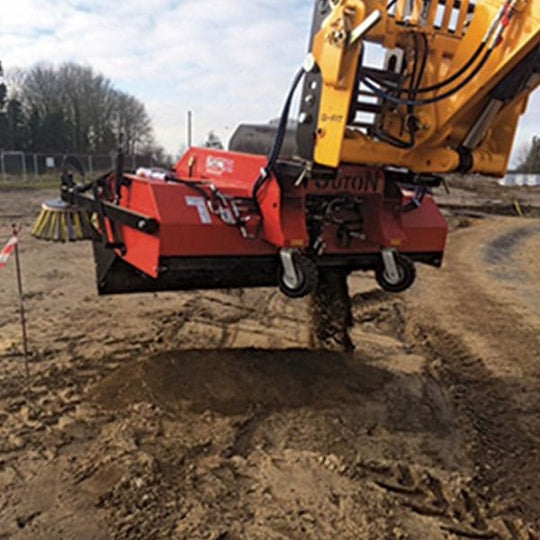
Invicta Forklift Mounted Hydraulic Sweeper/Collector
£7,220.85EX VAT · £8,665.02 INCView product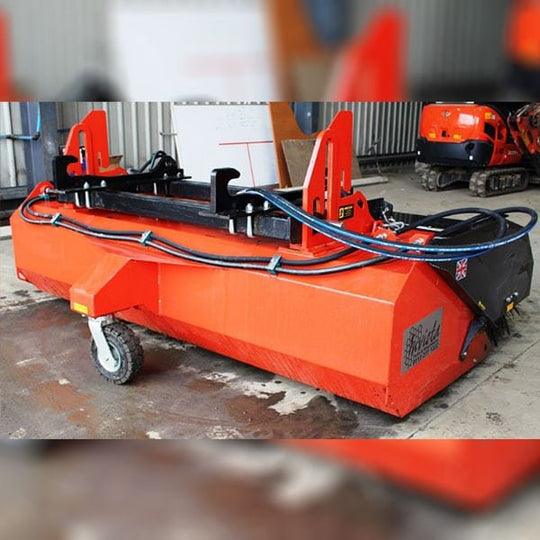
Quick Hitch Hydraulic Sweeper/Collector Attachment
£8,188.95EX VAT · £9,826.74 INCView product


Talk to a
specialist
Sizing, regulations, installation. Our team has been answering these questions for over 25 years.
Your factory and warehousing operations demand reliable, high-performance equipment that can handle the demands of industrial environments day after day, and our range of factory equipment is specifically designed to meet these demands. From our heavy-duty plastic containers that provide secure storage for components and materials, to our complete range of forklift attachments that enhance your existing machinery's versatility, we supply the essential equipment that keeps your operations running smoothly. Our powered handling equipment delivers the efficiency you need for moving heavy loads, while our drum handling equipment and drum accessories ensure safe and efficient management of liquid storage requirements. For those requiring secure containment, our bunds and containers provide compliant storage solutions that meet health and safety regulations, and our pallet trucks and stackers offer the manual handling support that every warehouse requires. We've built our reputation on supplying industrial-grade equipment that delivers consistent performance under pressure.
Factory And Warehousing FAQs
Do I need bunded storage for drums of oil or chemicals in my warehouse?
If you're storing more than 200 litres of oil, or any quantity of hazardous chemicals, UK regulations require secondary containment capable of holding at least 110% of the largest container's capacity (or 25% of total stored volume, whichever is greater). Our bunded pallets and IBC bunds are sized to meet these requirements and help you stay compliant with Environment Agency guidance. Get the bund capacity right first — attempting to retrofit compliance after an inspection is far more disruptive.
What's the difference between a pallet truck and a pallet stacker?
A pallet truck (or pump truck) moves loaded pallets horizontally across a warehouse floor and is ideal for loading docks and short transfers. A pallet stacker adds vertical lift, letting you raise loads onto racking or shelving, which a standard pallet truck can't do. If you're only moving stock at floor level, a truck is sufficient; if you need to store at height, you'll need a stacker.
Can forklift attachments be used on any make of forklift?
Most attachments are designed to fit standard hitch classes (typically Class II or III) rather than a specific forklift brand, so compatibility depends on your carriage and hitch dimensions rather than the manufacturer. Always check the attachment's weight capacity against your forklift's rated load to avoid overloading. If you're unsure of your machine's hitch class, check the data plate or manual before ordering.
Are heavy-duty plastic containers suitable for outdoor storage?
Yes — our industrial plastic containers are typically moulded from UV-stabilised polyethylene, which resists cracking and fading from sun exposure and won't corrode like metal alternatives. They're a practical choice for yards and loading areas where containers are left outdoors between uses. For long-term outdoor storage of liquids or hazardous materials, though, pair them with a bund to manage any spillage or rainwater ingress.
What should I check before buying a drum handling attachment or trolley?
Confirm the drum diameter and weight capacity match your standard drum size — most UK industrial drums are 205 litres, but not all handling equipment is universal. Check whether you need a rotating attachment (for decanting) or a simple lifting/transport unit, as these serve different jobs. Also consider floor surface and clearance, since some drum trolleys need a level, obstruction-free path to manoeuvre safely.
How do I choose the right powered handling equipment for my warehouse?
Start with load weight and lift height, then factor in floor space — powered pallet trucks and stackers need less manoeuvring room than a forklift, making them well suited to tighter aisles. Battery-powered units suit frequent, all-day use, while lower-duty applications may only need occasional charging. Also check doorway widths and ramp gradients on your site, as these often dictate which model will actually fit your operation.