SpillKits
Fast response to leaks.



Talk to a
specialist
Sizing, regulations, installation. Our team has been answering these questions for over 25 years.
Spill Kits FAQs
What size spill kit do I need for my tank?
As a rule of thumb, your spill kit should be able to absorb at least 25% of the largest single container or tank's total volume — this is the standard used by most insurers and environmental agencies. For a 1,000 litre oil or chemical tank, that means a kit capable of soaking up around 250 litres. If you're storing multiple tanks or drums in one bunded area, size the kit to the largest single vessel, not the combined total.
What's the difference between oil, chemical and general-purpose spill kits?
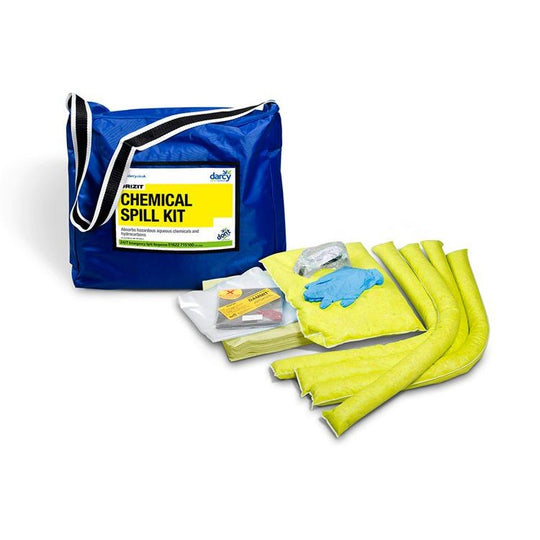
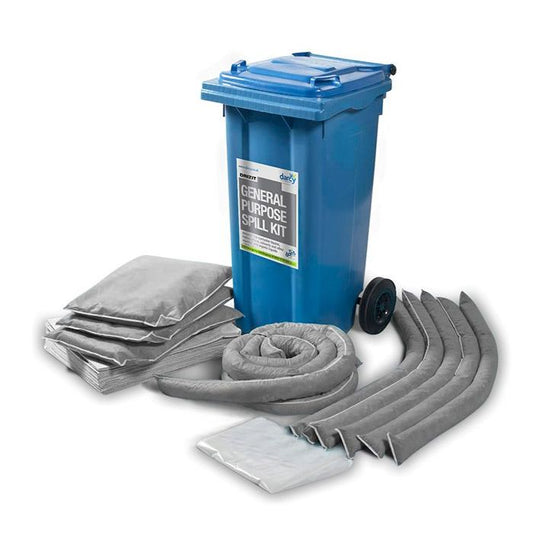
Oil-only kits use hydrophobic absorbents that repel water and only soak up hydrocarbons, making them ideal for diesel, heating oil and fuel spills, including on wet ground or water. Chemical kits use absorbents that are compatible with acids, alkalis and unknown substances, and are typically colour-coded yellow. General-purpose (maintenance) kits handle non-aggressive fluids like coolants and water-based liquids but shouldn't be used for aggressive chemicals or on water.
Am I legally required to have a spill kit near my tank?
Under the Control of Pollution (Oil Storage) (England) Regulations and equivalent devolved legislation, you must have adequate means to contain a spill from an oil storage tank, and a spill kit is widely regarded as best practice alongside bunding. The Environment Agency also expects spill response equipment on site wherever there's a foreseeable risk of pollution to land, drains or watercourses. Keeping a correctly sized kit next to your tank reduces liability and is often a condition of insurance.
What's typically included in a spill kit?
Most kits contain absorbent pads or granules, socks or booms to contain and divert the spill, disposal bags for used absorbent material, and basic PPE such as gloves and goggles. Kits are usually supplied in a wheeled bin, holdall or box so they're easy to store and transport to the spill location quickly. Always check the contents match the type of liquid you're storing before you buy.
How do I dispose of used spill kit absorbents?
Used absorbents that have soaked up oil, fuel or chemicals are classed as hazardous waste and must be disposed of via a licensed waste carrier — they cannot go in general or clinical waste bins. Bag and seal the used material in the disposal bags supplied with the kit and label it clearly with the substance absorbed. Keep a waste transfer note as evidence of compliant disposal in case of an Environment Agency inspection.
Where should spill kits be positioned and how often should they be checked?
Position spill kits as close as practical to the tank, fill point or areas where deliveries and transfers take place, so they're immediately accessible in an emergency rather than locked away. Check contents at least every three to six months, after any spill event, and replace absorbents that have degraded or been used. Staff who work near tanks should know where the kit is and how to use it before an incident happens, not during one.