Fencing
Contain and secure boundaries.

Fencing Sub-Categories

Hotline 50m Plastic Fencing Mesh Roll
£22.00EX VAT · £26.40 INCView product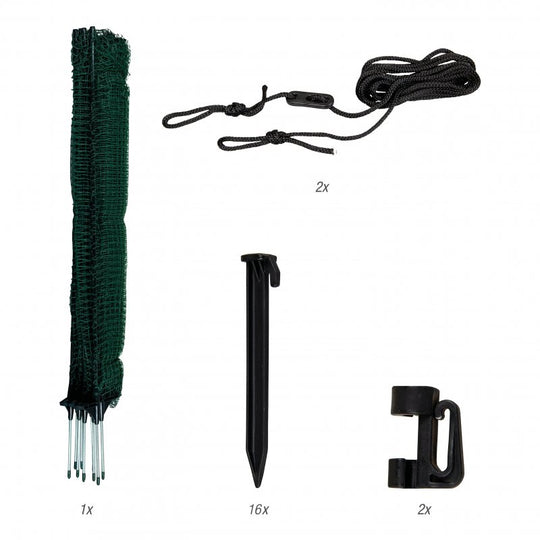
Hotline Temporary Fencing 20m
£42.15EX VAT · £50.58 INCView product
Hotline 12v sealed leisure battery - 35amp/hr
£124.00EX VAT · £148.80 INCView product
Hotline 12v Sealed Lead Oxide 36amp/hr Leisure Battery
£150.00EX VAT · £180.00 INCView product
Hotline Horse 200m Electric Fence Starter Kit
£169.00EX VAT · £202.80 INCView product
Hotline 12v sealed leisure battery - 75amp/hr
£194.00EX VAT · £232.80 INCView product
Hotline 2x Batteries and 4amp Charger Bundle
£244.00EX VAT · £292.80 INCView product
Hotline 25m Gated Poultry Netting Kit
£271.00EX VAT · £325.20 INCView product
Hotline Fire Drake 0.34J Energiser
£274.00EX VAT · £328.80 INCView product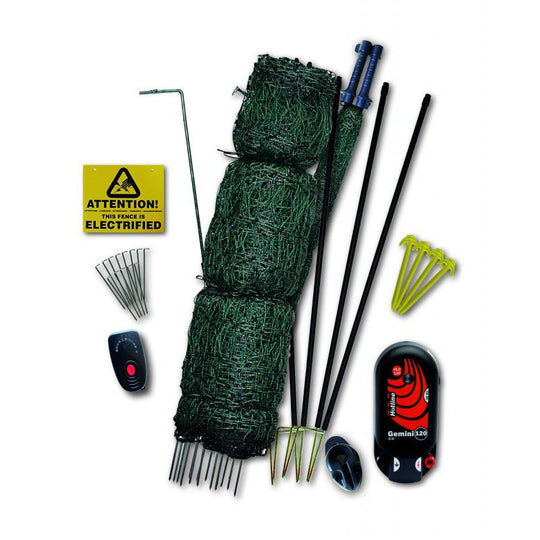
Hotline 50m Gated Poultry Netting Kit
£293.00EX VAT · £351.60 INCView product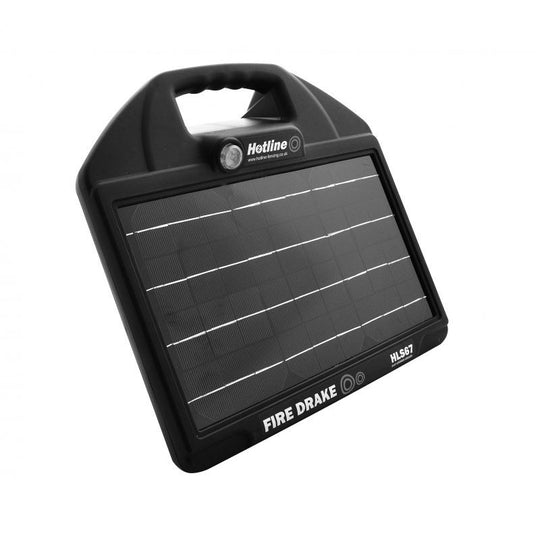
Hotline Fire Drake 0.67J Energiser
£315.00EX VAT · £378.00 INCView product
Hotline Fire Drake 2.0J Solar Energiser
£358.00EX VAT · £429.60 INCView product


Talk to a
specialist
Sizing, regulations, installation. Our team has been answering these questions for over 25 years.
We're excited to introduce our new fencing range through our partnership with Hotline Fencing, bringing you quality electric fencing products that keep your livestock secure and your boundaries clearly defined. From powerful energisers that deliver reliable performance to versatile netting and wire options, plus essential testers to keep everything running properly, we've got your fencing needs covered from start to finish. Our 12V leisure batteries ensure your system stays powered even in remote locations, while our convenient fencing kits take the guesswork out of getting started.
You can now source both tanks and fencing from one trusted supplier. We understand that every farm setup is different, so if you're unsure about which products suit your specific requirements, just get in touch €“ we're here to help.
Fencing FAQs
What size energiser do I need for my fence?
Energiser output should be matched to the length of fence line and the number of wire or netting strands you're running, plus a margin for vegetation contact and future expansion. As a rule of thumb, undersizing leads to a weak pulse and poor animal control, so it's better to size up slightly than run an energiser at its limit. If you're unsure, get in touch with your fence length and livestock type and we'll help you pick the right output.
Can I run an electric fence off a 12V leisure battery, and how long will it last?
Yes — a 12V leisure battery paired with a battery energiser is the standard setup for fields without mains power. Runtime depends on the energiser's power draw and battery capacity, but a fully charged leisure battery will typically run a fence for several weeks between charges. Adding a solar panel kit extends this considerably and is worth considering for permanent or remote installations.
What's the difference between electric netting and wire for containing livestock?
Electric netting is a fast, flexible option for strip grazing, poultry or temporary sheep and goat enclosures, as it's quick to move and gives a visible physical barrier as well as a shock deterrent. Wire (whether steel or conductive polywire/tape) is better suited to permanent or semi-permanent boundaries and larger stock such as cattle and horses, where a solid, long-lasting run is needed. Most farms end up using a combination of both depending on the job.
Why do I need a fence tester and how do I use one?
A fence tester tells you the actual voltage running through the line, which is the only reliable way to know if your fence is delivering a strong enough deterrent to livestock. Simply clip the earth lead to a ground stake or metal post and touch the probe to the wire — a healthy fence should read at least several thousand volts. Regular testing helps you catch faults like vegetation contact, broken wires or poor earthing before they become a containment problem.
What's included in a fencing kit, and are they suitable for beginners?
Our fencing kits typically bundle an energiser, netting or wire, posts and the basic connectors needed to get a fence up and running without having to source each component separately. They're a practical starting point if you're new to electric fencing or setting up a straightforward paddock, run or poultry enclosure. If your setup is larger or more complex — long runs, mixed livestock, multiple zones — it's worth speaking to us first, as a kit may not cover everything you need.
How do I earth an electric fence properly?
Good earthing is essential to a well-performing fence, as a poor earth return is one of the most common causes of a weak shock. Use galvanised earth stakes driven fully into moist soil, spaced a few metres apart and connected in series, with more stakes needed on dry or sandy ground. As a guide, allow roughly one metre of earth stake per joule of energiser output, and check connections regularly for corrosion.