OnionShaped Septic Tanks
Compact-footprint septic storage.

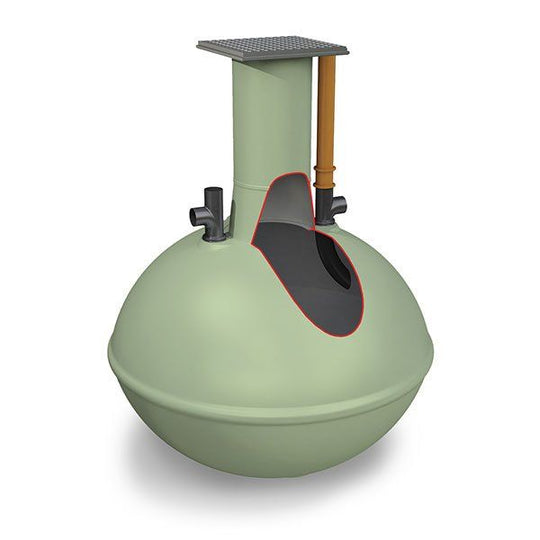
Clearwater 2,800 Litre Septic Tank
£862.00EX VAT · £1,034.40 INCView product
Klargester Alpha 2800 Litre Septic Tank
£927.00EX VAT · £1,112.40 INCView product
Clearwater 3,800 Litre Septic Tank
£1,043.00EX VAT · £1,251.60 INCView product
Klargester Alpha 3,800 Litre Septic Tank
£1,121.00EX VAT · £1,345.20 INCView product


Talk to a
specialist
Sizing, regulations, installation. Our team has been answering these questions for over 25 years.
One of the most popular septic tanks in the UK, the onion shape shaped septic tank is easy to install and maintain. At Tanks Direct, we offer a wide range of onion septic tanks to suit different requirements and budgets. All our onion septic tanks comply with binding rules outlined by the environment agency, providing you with a safe and efficient way to store and treat waste, before discharging the treated wastewater into the ground via a drainage field.
When choosing your onion septic tank, consider the size available on your property and only choose a tank that can be installed comfortably and safely in the size available. Also consider the size of your house and the number of bedrooms €” the larger your property, the larger the septic tank you will need. We offer a range of high-quality onion septic tanks from leading and trusted brands, with capacities ranging from 2,800 to 4,600 litres.
Onion Shaped Septic Tanks FAQs
Why is the onion shape used for septic tanks?
The tapered, rounded profile distributes ground pressure evenly across the shell, which is why onion-shaped tanks are typically made from GRP (fibreglass) rather than polyethylene. This shape also allows for a smaller excavation footprint compared to some rectangular or cylindrical tanks, making it a practical choice for tighter gardens or awkward access.
What size onion septic tank do I need for my property?
Sizing is based on the number of bedrooms, as this determines the likely occupancy and daily wastewater volume — as a guide, a 2,800 litre tank typically suits a 3-4 bedroom property, rising to 4,600 litres for larger households. It's always worth allowing a little extra capacity if you're planning an extension or expect visitors to stay regularly, since undersizing leads to more frequent desludging.
Do I need planning permission or Environment Agency approval to install one?
Most domestic septic tank installations fall under the Environment Agency's general binding rules rather than requiring a full permit, provided discharge is to a drainage field (not directly to a watercourse) and within the specified volume limits. You'll still need building regulations sign-off for the installation itself, and it's worth checking with your local authority if the property is in a groundwater source protection zone.
Can an onion septic tank be installed under a driveway or in a garden with vehicle access?
Standard onion tanks are designed for pedestrian areas and light garden use only — they are not load-rated for vehicle traffic. If the tank needs to sit under a driveway or anywhere vehicles will pass, you'll need a trafficable or reinforced access cover, or a different tank design entirely, so it's best to plan this before ordering.
What groundwork is needed before installation?
You'll need a suitably sized excavation with a level, stable base — typically a concrete or pea-gravel bed depending on ground conditions and manufacturer instructions. Good access for delivery and lifting equipment matters too, as onion tanks are bulky and awkward to manoeuvre by hand once on site.
How is the treated wastewater disposed of once it leaves the tank?
Septic tanks (unlike sewage treatment plants) only settle and partially break down waste, so the effluent leaving the tank still needs further treatment before it reaches groundwater. This happens via a properly designed drainage field, which allows natural soil bacteria to finish the treatment process — discharging septic tank effluent directly to a ditch or watercourse isn't permitted under the current binding rules.