SmallGrease Traps
Compact FOG interception.


Grease Trap, Jumbo Micro
£329.00EX VAT · £394.80 INCView product
Grease Trap, Jumbo Midi
£432.00EX VAT · £518.40 INCView product
Grease Trap, Jumbo2
£761.00EX VAT · £913.20 INCView product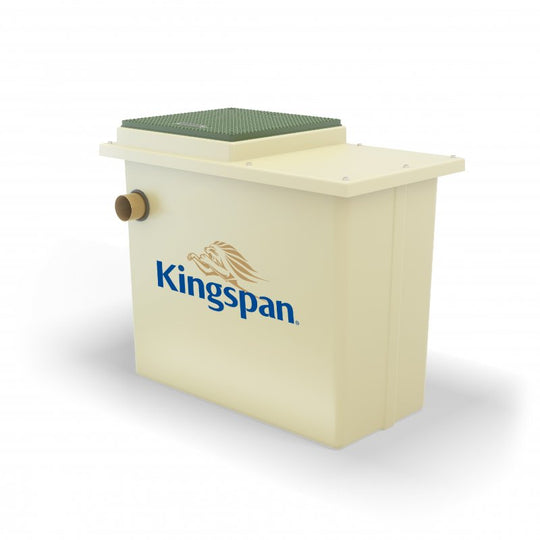
500 litre - Klargester Grease Separator NSG01
£1,909.00EX VAT · £2,290.80 INCView product
1000 litre - Klargester Grease Separator NSG02
£3,222.00EX VAT · £3,866.40 INCView product


Talk to a
specialist
Sizing, regulations, installation. Our team has been answering these questions for over 25 years.
Discover our collection of small grease traps at Tanks Direct, designed to protect your plumbing system and comply with environmental regulations. Our small grease traps are perfect for residential kitchens, small restaurants, cafes, and food service establishments that need effective grease management without taking up too much space. These compact units efficiently separate fats, oils, and grease (FOG) from wastewater, preventing blockages and reducing the risk of sewage backups.
We offer a range of small grease traps with varying capacities and designs to suit different installation requirements and flow rates.
Our grease traps feature durable construction materials resistant to corrosion and high temperatures, ensuring long-lasting performance in demanding kitchen environments. Many models come with easy-access lids for simple maintenance and cleaning. Our knowledgeable team can help you choose the right size and type of grease trap based on your specific requirements and local regulations.
Small Grease Traps FAQs
What size grease trap do I need for a small kitchen?
Sizing depends on the number of appliances discharging to it, peak flow rate, and how many meals you're serving per day — as a rough guide, a single domestic-style kitchen or small café often suits a 25-50 litre unit, while a busier café or small restaurant kitchen may need 50-100 litres. Local building control or your water authority may specify a minimum capacity, so it's worth checking before you order. Our team can help you calculate the right size from your appliance list and cover count.
Can a small grease trap be installed under a sink or worktop?
Yes, many small grease traps are specifically designed as compact under-sink or under-counter units, making them ideal where floor space or plant room access is limited. They typically connect directly to the waste pipe from one or two appliances rather than a whole kitchen's drainage. Make sure there's enough clearance around the unit for the lid to be removed for cleaning.
How often does a small grease trap need emptying and cleaning?
As a general rule, small grease traps should be checked weekly and emptied when the grease layer reaches around a quarter of the trap's depth — for a busy kitchen this can mean cleaning every few days. Leaving it too long reduces separation efficiency and can lead to odours and blockages further down the line. Our units feature easy-access lids specifically to make this a quick job rather than a major task.
What material are small grease traps made from, and does it matter?
Most small grease traps are made from stainless steel or durable plastic (such as polyethylene), both chosen for resistance to corrosion, grease and repeated high-temperature discharge from dishwashers and pans. Stainless steel units tend to be favoured in commercial kitchens for hygiene and durability, while plastic models offer a lighter, more budget-friendly option for domestic or lower-volume use. Either way, look for a unit with a tight-fitting, odour-sealing lid.
Do I need planning permission or building regs sign-off for a small grease trap?
A small under-sink or in-line grease trap doesn't usually need planning permission, but food business premises are generally required under Building Regulations (Part H) and local trade effluent consent rules to have adequate FOG control before wastewater reaches the drain. Many water authorities also ask commercial kitchens to register their grease management arrangements. It's worth checking with your local authority or water company before installation, particularly for a new food business.
What's the difference between a small grease trap and a full grease separator?
A small grease trap is a compact, passive unit designed for lower flow rates — typically one or two appliances in a residential kitchen, café or small takeaway. A full grease separator is a larger, often below-ground or plant-room installation designed to handle the combined discharge of a whole commercial kitchen and meets a higher British or European standard (EN 1825). If you're scaling up or serving significantly more covers, it's worth discussing whether a separator is more appropriate than multiple small traps.