SpillTrays
Catch drips and small spills.

Spill drip tray base only, 28 Litre
£17.10EX VAT · £20.52 INCView product
Spill drip tray base only, 65 Litre
£41.25EX VAT · £49.50 INCView product
Spill Drip tray
£43.00EX VAT · £51.60 INCView product
Medium Spill Drip tray
£53.75EX VAT · £64.50 INCView product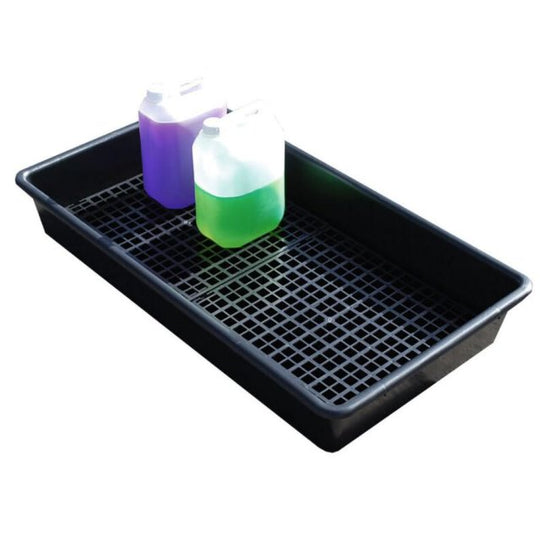
Spill drip tray with Grid base, 65 Litre
£55.51EX VAT · £66.61 INCView product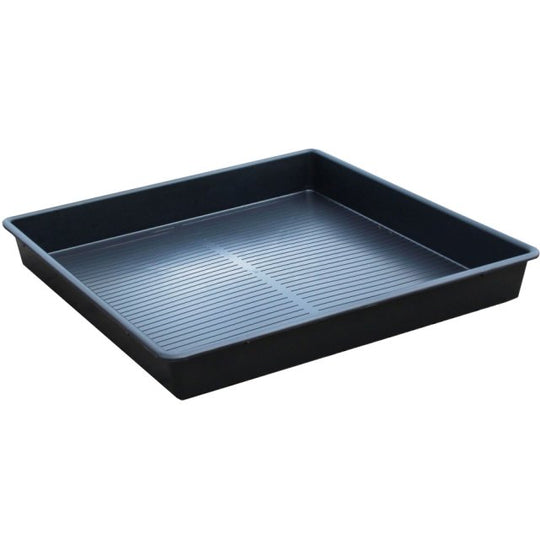
Spill drip tray base only, 100 Litre
£59.18EX VAT · £71.02 INCView product
Extra Large Spill Drip Tray, Base Only
£60.20EX VAT · £72.24 INCView product
Spill drip tray base only, 110 Litre
£82.63EX VAT · £99.16 INCView product
Spill drip tray with grate, 63 Litre
£94.49EX VAT · £113.39 INCView product
Extra Large Spill Drip tray
£96.26EX VAT · £115.51 INCView product
Spill drip tray base only, 230 Litre
£118.47EX VAT · £142.16 INCView product
100L Container spill tray
£128.52EX VAT · £154.22 INCView product
Spill drip tray base only, 145 Litre
£157.90EX VAT · £189.48 INCView product


Talk to a
specialist
Sizing, regulations, installation. Our team has been answering these questions for over 25 years.
Welcome to our range of spill trays.
With various sizes from 8 litres to over 100 litres from a range of manufacturers we have you covered. Whether its for COSHH compliance or you have employees without the steadiest of hands our spill trays will hold those spills and save your surfaces and prevent any further issues from slips, or mixing.
Spill Trays FAQs
What size spill tray do I need?
As a rule of thumb, the tray should hold at least 25% of the total volume of containers stored on it, or 110% of your largest single container, whichever is greater — this is standard COSHH practice. For a single drum or IBC, check the manufacturer's stated sump capacity against the container volume before ordering. If you're storing multiple smaller containers, size up rather than down, as spills often exceed the volume of a single item.
What materials are spill trays made from, and does it matter?
Most spill trays are polyethylene or galvanised steel, with polyethylene being the more common choice as it resists a wider range of chemicals and won't corrode or rust. Steel trays are tougher underfoot and suit heavier drums or forklift traffic, but check chemical compatibility first, as some acids and solvents will attack steel over time. If you're unsure what's being stored on it, polyethylene is the safer default.
Can spill trays be used outdoors?
Yes, provided the tray is UV-stabilised and rated for outdoor use — polyethylene trays generally cope well with weathering, whereas untreated steel can corrode over time. Bear in mind that an open tray outdoors will also collect rainwater, reducing your usable spill capacity, so a bunded pallet or tray with a cover is worth considering for permanent outdoor storage.
Do I need a spill tray for COSHH compliance?
If you store or handle hazardous substances — oils, chemicals, solvents, even some cleaning products — a spill tray is a straightforward way to meet your COSHH duty to prevent spills reaching drains, soil or watercourses. It's not just about legal compliance either; a tray gives you a contained, safe way to catch drips during decanting or dispensing. Always store the relevant safety data sheet nearby so staff know how to respond if a spill does occur.
Can I stack drums or place an IBC directly on a spill tray?
Most spill trays are designed for a single drum, IBC or a set number of smaller containers sat directly on the tray or on an integral grid — check the manufacturer's weight rating before loading. Stacking drums on top of each other isn't recommended unless the tray is specifically built for it, as the combined weight can exceed the tray's load capacity or make it unstable. If you need to store multiple IBCs, look at our larger sump trays or bunded pallets rather than doubling up on a smaller tray.
How do I clean and maintain a spill tray after use?
Empty and clean the tray as soon as possible after a spill, using a method appropriate to the substance involved — check the safety data sheet for disposal guidance, as contaminated liquid usually can't just go down the drain. Rinse polyethylene trays with water and mild detergent for general upkeep, and inspect regularly for cracks, discolouration or brittleness, which can indicate chemical degradation. Replace any tray that's cracked or no longer holds liquid reliably, as its containment capacity can no longer be trusted.