SolarLighting
Light without mains power.

JFC Flare 6W Solar Wall Light
£32.00EX VAT · £38.40 INCView product
JFC Mini Saber 15W Solar Floodlight
£86.00EX VAT · £103.20 INCView product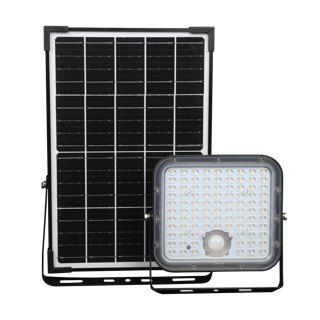
JFC Helios 30W Solar Floodlight
£96.00EX VAT · £115.20 INCView product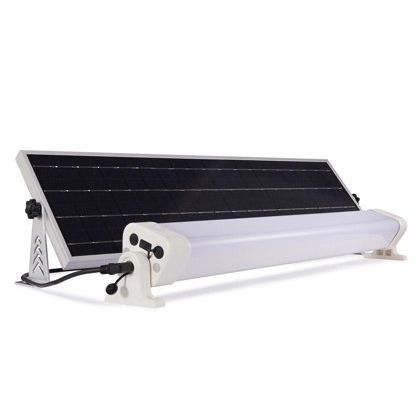
JFC Apollo - Solar Powered Batten Light
£107.00EX VAT · £128.40 INCView product
JFC Saber 40W Solar Floodlight
£209.00EX VAT · £250.80 INCView product


Talk to a
specialist
Sizing, regulations, installation. Our team has been answering these questions for over 25 years.
Solar Lighting FAQs
How many lumens do I need for driveway or yard lighting?
For general pathway or driveway illumination, look for 100-300 lumens per fitting, spaced roughly 2-3 metres apart depending on layout. Higher-output units (400 lumens plus) suit security applications or larger open areas such as tank compounds and yards. As a rule, err on the higher side if the area has no other ambient lighting nearby.
Will solar lights work reliably through a UK winter?
Performance does drop with shorter days and lower light levels, so expect reduced run-times between November and February compared with summer months. Choosing units with a larger solar panel and higher-capacity battery (lithium rather than nickel-based) helps bridge the gap. Positioning the panel to catch maximum available daylight, away from overhangs or shade, makes the biggest practical difference.
What IP rating should outdoor solar lights have?
For anything mounted outside and exposed to rain, look for a minimum of IP65 on the light fitting itself. IP44 units are generally only suitable for sheltered spots such as under an eave or porch. If the light will be near ground level or subject to standing water or spray, IP67 gives extra reassurance.
Can solar lights be fitted near or on top of tanks and enclosures?
Yes, solar lights are commonly used to illuminate tank compounds, access hatches and enclosure perimeters, particularly where mains power isn't readily available. Fixings should go into the surrounding structure, fence or a dedicated post rather than directly into a tank wall, to avoid compromising the tank's integrity. Keep the solar panel unobstructed and angled away from any tall enclosure sides that could cast shade over it.
Do solar lights need any wiring or electrical installation?
No — standalone solar lights are self-contained, with the panel, battery and LED all built into one unit, so there's no cabling or electrician required. Installation is typically a case of ground spikes, screw-fixing a bracket, or surface-mounting with the fixings supplied. This makes them a straightforward option for remote sites, boundaries or off-mains locations where running power would be impractical.
How long does the battery in a solar light typically last before replacement?
Most integrated batteries (usually lithium-ion) last around 2-4 years of regular use before capacity noticeably drops off. Some fittings have a replaceable battery compartment, while fully sealed units mean replacing the whole light once performance fades. Keeping the solar panel clean and free of dust or algae build-up will also help maintain charging efficiency over its lifespan.