KingspanKlargester
Kingspan Klargester range.

Klargester Sample Chamber
£204.00EX VAT · £244.80 INCView product
High Level Alarm (Basic)
£277.48EX VAT · £332.98 INCView product
Klargester Alpha 2800 Litre Septic Tank
£927.00EX VAT · £1,112.40 INCView product
Klargester Full Retention Separator - NSFP003 - 170M² drainage area
£988.00EX VAT · £1,185.60 INCView product
Klargester Bypass Separator - NSBP003 - 1670M² Drainage Area
£1,014.00EX VAT · £1,216.80 INCView product
Klargester Bypass Separator - NSBP004 - 2500M² Drainage Area
£1,100.00EX VAT · £1,320.00 INCView product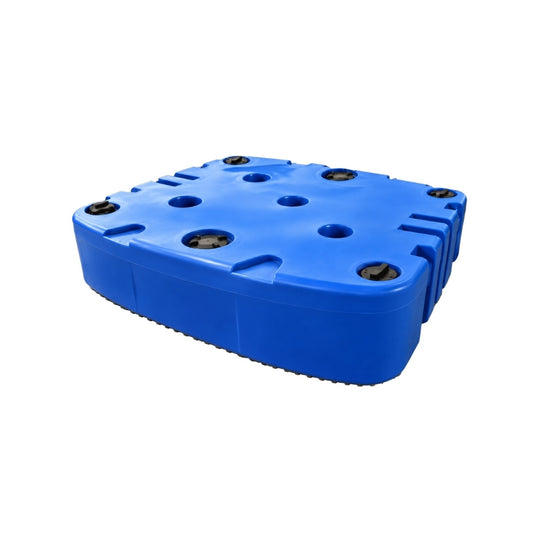
2250 Litre Above Ground Effluent Tank
£1,100.00EX VAT · £1,320.00 INCView product
Klargester Alpha 3,800 Litre Septic Tank
£1,121.00EX VAT · £1,345.20 INCView product
Klargester Gamma 2,800 Litre Septic Tank - Single Stage
£1,152.00EX VAT · £1,382.40 INCView product


Talk to a
specialist
Sizing, regulations, installation. Our team has been answering these questions for over 25 years.
Kingspan Klargester FAQs
What's the difference between a Klargester septic tank and a Klargester sewage treatment plant?
A septic tank simply separates solids from wastewater and relies on the ground (via a drainage field) to treat the remaining liquid. A Klargester sewage treatment plant, such as the BioDisc or BioTec range, actively treats the effluent using aeration and biological processes, producing a cleaner discharge that can often go to a watercourse or ditch under an Environment Agency permit rather than to soakaway.
How do I size a Klargester treatment plant or septic tank correctly?
Sizing is based on population equivalent (PE) — essentially the number of bedrooms or people served, not just current occupancy. Klargester's own guidance and Building Regulations (Part H) recommend sizing for potential future use, so undersizing to save cost now can cause problems later. If in doubt, size up rather than down, especially where extensions or holiday letting are possible.
Do I need planning permission or an Environment Agency permit for a Klargester system?
You don't usually need planning permission just to install a septic tank or treatment plant, but discharges to a watercourse from a sewage treatment plant generally require registration or a permit with the Environment Agency (SEPA in Scotland, NRW in Wales). Discharges to ground via a drainage field are covered under general binding rules provided you meet the criteria. Always check current guidance before installation, as rules on existing septic tank discharges have tightened in recent years.
Can a Klargester tank be installed under a driveway or in a field with vehicle traffic?
Standard GRP Klargester tanks are designed for installation in gardens or grassed areas, not under trafficked surfaces, unless a specific traffic-rated cover slab or reinforced access chamber is specified. If a vehicle load is unavoidable, tell us at the point of order so the correct trafficable lid or surround can be supplied — retrofitting is far harder than specifying it upfront.
How often does a Klargester sewage treatment plant need emptying and servicing?
Most Klargester treatment plants need emptying roughly once a year, though this depends on usage and tank size — your installation handbook will give the specific interval. They also need an annual service by a competent engineer to check the mechanical and electrical components, in line with the manufacturer's warranty conditions and general binding rules. Skipping servicing is the most common cause of plants failing to treat effluent properly.
What should I check before my Klargester tank is delivered?
Confirm the excavation is ready to the correct dimensions and depth, with a suitable base (typically pea shingle or concrete, depending on the model and ground conditions) prepared in advance, as tanks are usually installed on the day of delivery. Check access for the delivery vehicle, as GRP tanks are lightweight but bulky, and some sites need a crane or off-loading assistance for larger plants. Also make sure any groundwater or high water table has been accounted for, as this affects backfill and anchoring requirements.