Harlequin
Harlequin storage range.

2500 Litre Slimline Bunded Diesel Tank
£2,735.00EX VAT · £3,282.00 INCView product
Harlequin CAP12 Sewage Treatment Plant
£3,025.00EX VAT · £3,630.00 INCView product
3500 Litre Bunded Oil Tank
£3,324.00EX VAT · £3,988.80 INCView product
5400 Litre Bunded Oil Tank
£3,505.00EX VAT · £4,206.00 INCView product
Harlequin HydroClear 12 Person Sewage Treatment Plant
£3,760.00EX VAT · £4,512.00 INCView product
5000 Litre Bunded Diesel Tank
£4,880.00EX VAT · £5,856.00 INCView product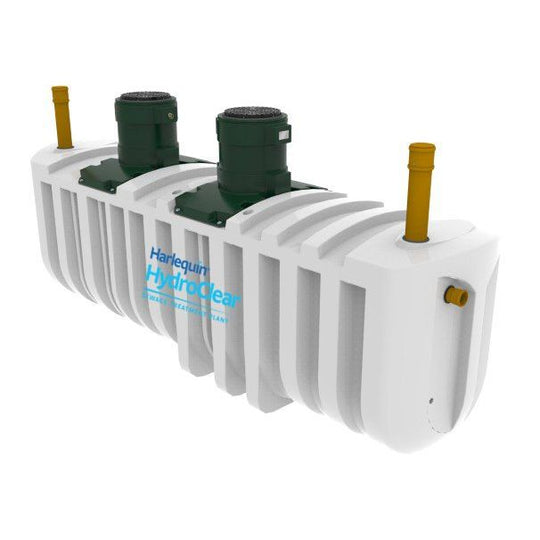
Harlequin HydroClear 20 Person Sewage Treatment Plant
£4,895.00EX VAT · £5,874.00 INCView product
7500 Litre Bunded Oil Tank
£5,191.00EX VAT · £6,229.20 INCView product
9250 Litre Bunded Oil Tank
£5,864.00EX VAT · £7,036.80 INCView product
7500 Litre Diesel Tank
£6,168.00EX VAT · £7,401.60 INCView product
9250 Litre Bunded Diesel Tank
£6,965.00EX VAT · £8,358.00 INCView product
Harlequin HydroClear 30 Person Sewage Treatment Plant
£7,820.00EX VAT · £9,384.00 INCView product
Harlequin HydroClear 40 Person Sewage Treatment Plant
£8,985.00EX VAT · £10,782.00 INCView product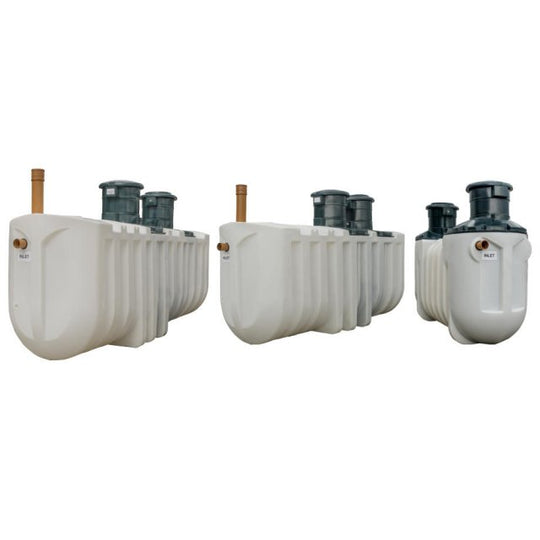
Harlequin HydroClear 50 Person Sewage Treatment Plant
£12,450.00EX VAT · £14,940.00 INCView product


Talk to a
specialist
Sizing, regulations, installation. Our team has been answering these questions for over 25 years.
Harlequin FAQs
What types of tank does the Harlequin range cover?
Harlequin manufacture a broad range of polyethylene tanks including potable water storage, rainwater harvesting systems, septic tanks, and bunded oil and chemical tanks. Most are moulded in one piece using MDPE, giving a robust, corrosion-free tank suitable for above or below ground installation depending on the model. Check the individual product spec, as burial depth and inlet/outlet configurations vary across the range.
Can Harlequin tanks be buried underground?
Many Harlequin tanks are specifically designed for underground installation, with ribbed or dimpled walls to resist ground pressure and a design depth stated in the product literature. You'll need to follow the manufacturer's installation guide closely, particularly around pea-shingle backfill, concrete surrounds where specified, and groundwater conditions. If you've got a high water table or vehicle loading above the tank, additional measures such as a concrete slab or traffic-rated cover may be required.
How do I choose the right size Harlequin rainwater harvesting tank?
Sizing depends on roof catchment area, average rainfall for your region, and intended use — garden irrigation needs less storage than a system feeding toilets and a washing machine. A rough rule of thumb for domestic use is 5,000–7,500 litres, but larger commercial or agricultural applications may need considerably more. Our team can help you calculate a suitable size based on catchment and demand if you're unsure.
Are Harlequin septic tanks compliant with current building regulations?
Harlequin septic tanks are manufactured to meet BS EN 12566-1 and carry the necessary CE/UKCA marking, but compliance also depends on correct installation, discharge consent, and — since the 2020 general binding rules — routing to a soakaway rather than a watercourse. If your septic tank discharges to a watercourse, you'll typically need to upgrade to a sewage treatment plant. Always check with your local Environment Agency office or building control before installation.
What's the lead time and delivery like for Harlequin tanks?
Larger Harlequin tanks are usually delivered on a kerbside pallet or crane-offload lorry, so you'll need suitable site access and enough manpower or machinery to move the tank into position — these are heavy, bulky items even when empty. Lead times vary by tank size and current stock levels, so it's worth confirming dispatch timescales before you commit to a groundworks date. Always inspect the tank on delivery for any transit damage before signing for it.
Do Harlequin bunded tanks need any special installation considerations?
Bunded tanks have an integral secondary containment skin designed to hold 110% of the tank's capacity in the event of a leak, which is a requirement for oil storage near watercourses or in vulnerable groundwater areas. They still need a stable, level, load-bearing base — usually a concrete or paving slab — and should be sited with fire regulation separation distances from boundaries and buildings in mind. Check whether your specific model requires venting or an overfill alarm as part of a compliant installation.