SafetyUnlimited
Safety Unlimited range.

4 Drum Store with Up and Over Lid for External Use
£2,485.00EX VAT · £2,982.00 INCView product
4 Drum Store for External Use
£2,710.00EX VAT · £3,252.00 INCView product
Gas Cylinder Safety Store E-GCS30
£3,564.00EX VAT · £4,276.80 INCView product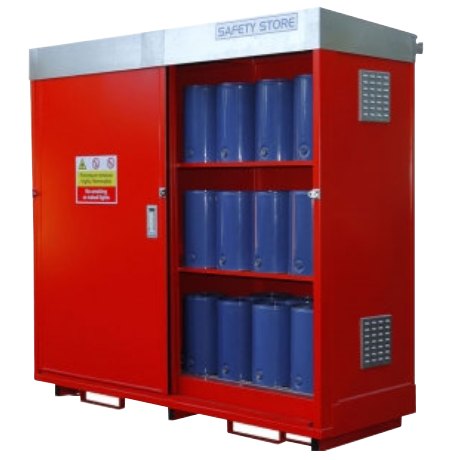
380 Litre External Steel Drum Store
£4,090.00EX VAT · £4,908.00 INCView product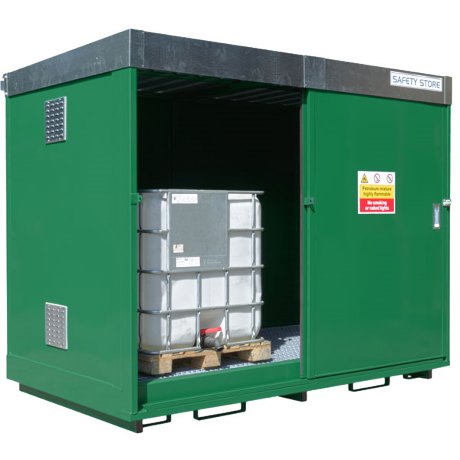
2 IBC / 8 Drum Steel Dual Purpose Sliding Door Storage Unit
£6,055.00EX VAT · £7,266.00 INCView product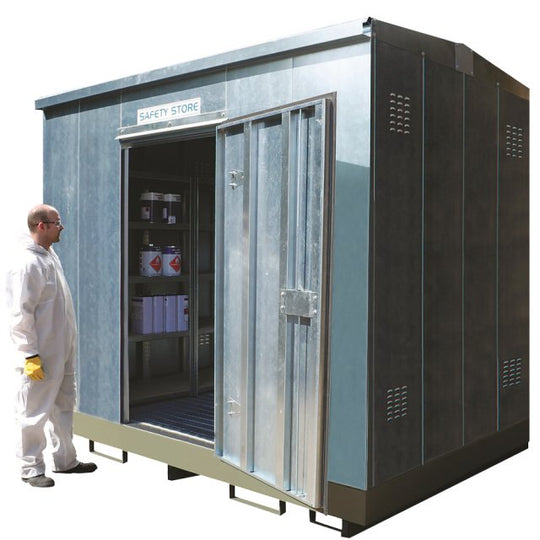
Galvanised Safety Store with Single Door, Economy
£6,250.00EX VAT · £7,500.00 INCView product
4 IBC / 16 Drum Steel Dual Purpose Sliding Door Storage Unit
£6,810.00EX VAT · £8,172.00 INCView product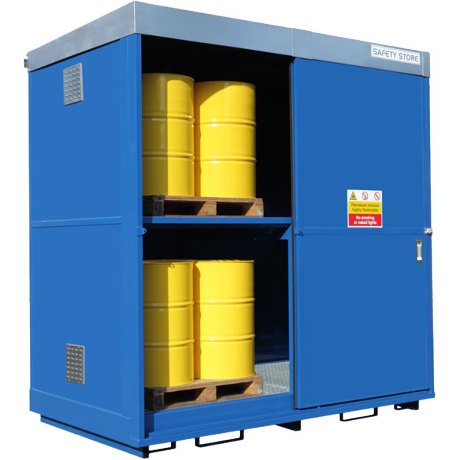
16 Drum Steel Storage Unit
£7,145.00EX VAT · £8,574.00 INCView product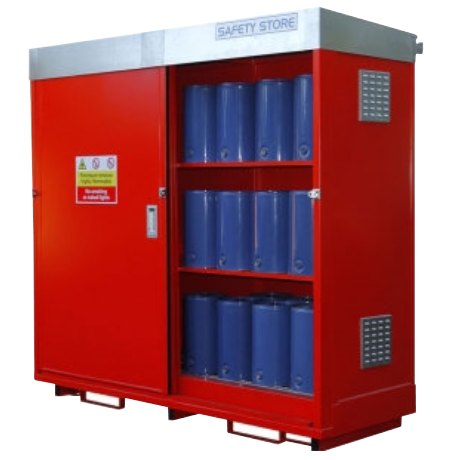
660 Litre External Steel Drum Store
£7,680.00EX VAT · £9,216.00 INCView product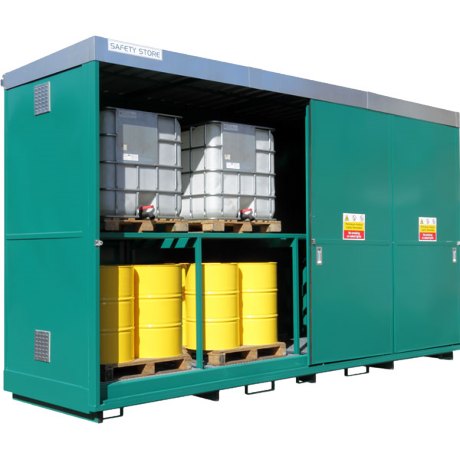
8 IBC / 32 Drum Steel Dual Purpose Sliding Door Storage Unit
£9,865.00EX VAT · £11,838.00 INCView product
12 IBC / 48 Drum Steel Dual Purpose Sliding Door Storage Unit
£15,920.00EX VAT · £19,104.00 INCView product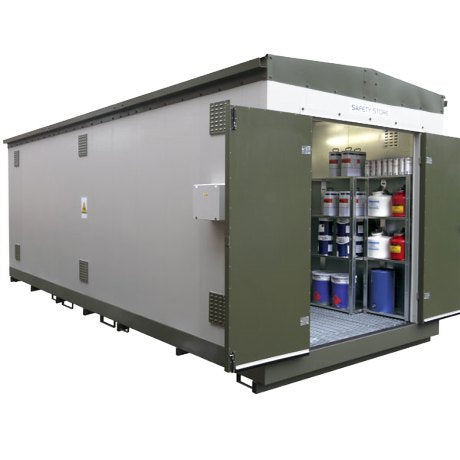
Relocatable Safety Store
£22,275.00EX VAT · £26,730.00 INCView product
24 IBC / 96 Drum Steel Dual Purpose Sliding Door Storage Unit
£25,275.00EX VAT · £30,330.00 INCView product


Talk to a
specialist
Sizing, regulations, installation. Our team has been answering these questions for over 25 years.
Safety Unlimited FAQs
Do I need bunding around my tank, and how much capacity should it provide?
If you're storing oil, chemicals or other pollutants, secondary containment (bunding) is a legal requirement under environmental regulations, and for most single tanks the bund must hold at least 110% of the tank's total capacity. Where you have multiple tanks in one bund, it needs to hold 110% of the largest tank or 25% of total combined capacity, whichever is greater. Integrally bunded tanks come with this built in, saving you from constructing a separate bund wall.
What's the purpose of a high-level alarm and is it a legal requirement?
A high-level alarm alerts you audibly and/or visually when tank contents reach a preset level, preventing overfilling during deliveries — a common cause of spills and pollution incidents. While not always a blanket legal requirement, many insurers and environmental permits expect one on fuel, oil and chemical tanks, and it's considered best practice on any tank filled by tanker or bowser. Battery-powered and mains-wired versions are both available depending on tank location and access to power.
Should tank access covers be lockable?
Yes, lockable covers are strongly recommended on any tank storing fuel, chemicals or wastewater, both to prevent unauthorised access or tampering and to stop children or animals falling in. This is particularly important for septic tanks and cesspools, where the Building Regulations require covers that resist accidental opening. Choose a cover rated for the loading it will see — pedestrian-only areas need less than covers sited near vehicle traffic.
What safety signage do I need to display on a tank installation?
As a minimum, fuel and chemical tanks should carry clear product identification, hazard warnings (such as flammable or corrosive symbols) and no-smoking signage where relevant. COSHH-regulated substances also require signage identifying the specific hazard classification. Durable, weatherproof signs fixed directly to the tank or nearby fencing are best, as paper labels degrade quickly outdoors.
Do I need a spill kit on site even if my tank is bunded?
Yes — bunding contains a total tank failure, but a spill kit deals with the smaller, more common incidents that happen during deliveries, connections or maintenance, such as a hose disconnecting or an overfill before the alarm triggers. Keep the kit close to the tank, not locked away in a distant store, so it's genuinely usable in an emergency. Kits should include absorbent pads, socks and a container for contaminated waste, sized to the type and volume of liquid stored.
What access and fall-protection equipment is needed for tanks with elevated inspection points?
Any tank with an inspection hatch, dip point or manway above standing height needs a proper means of safe access — typically a fixed ladder, platform or step system rather than a freestanding ladder brought in each time. Where there's a risk of falling into an open manway, edge protection or a harness anchor point should be fitted before anyone works at height. This falls under the Work at Height Regulations, so it's worth specifying access equipment at the point of tank installation rather than retrofitting later.