SafetyBarriers
Segregate and protect.
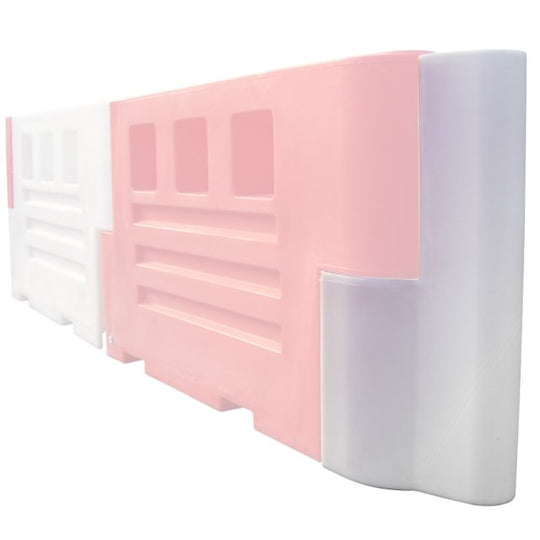
Heavy Duty Road Barrier End Stop-White
POAPrice on applicationView product
Pack (2) RB500 Track, Road or Site Barrier, Red and White
POAPrice on applicationView product
Pack (2) Track Road and Site Barrier -RB1000,
POAPrice on applicationView product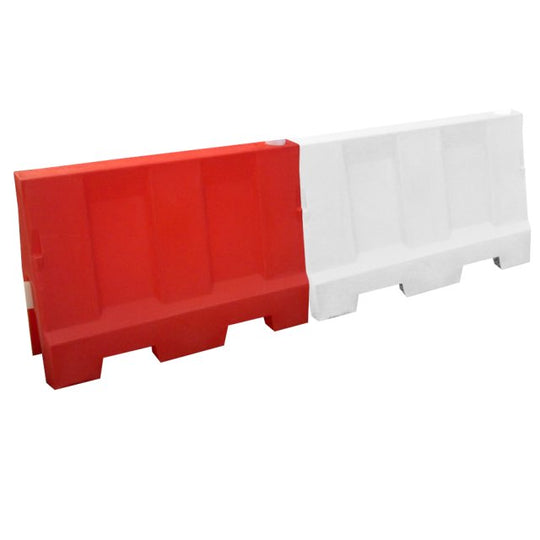
Pack (2) 1.2 Metre Evo Red and White Road Traffic Safety Barriers
POAPrice on applicationView product
Pack (2) Track Road and Site Barrier - RB1300, Red and White
POAPrice on applicationView product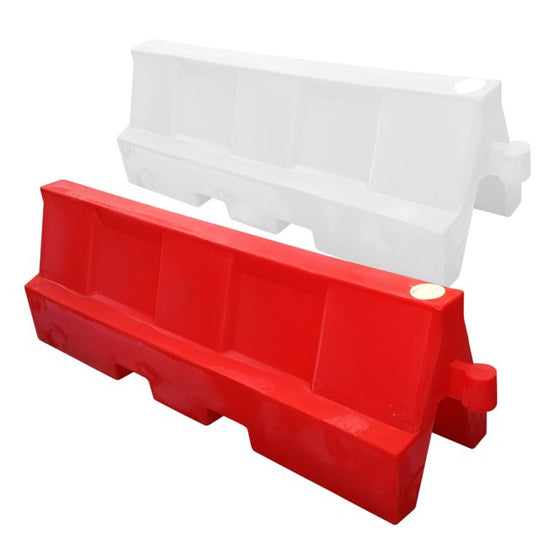
Pack (2) 2 Metre Euro Safety Barriers, one red, one white
POAPrice on applicationView product
Pack (2) Track Road and Site Barrier - RB1500,
POAPrice on applicationView product


Talk to a
specialist
Sizing, regulations, installation. Our team has been answering these questions for over 25 years.
Safety Barriers FAQs
What type of safety barrier do I need for a tank storage or bunded area?
For pedestrian segregation around water, chemical or fuel tanks, modular plastic barriers (often water- or sand-filled for ballast) are the most common choice, as they're quick to install and don't need fixing to the ground. Where vehicle impact is a risk — forklifts, delivery lorries reversing near a tank compound — you'll want a heavier-duty steel or armco-style barrier rated for the expected impact energy. Always check the specific risk assessment for the site rather than choosing on cost alone.
Are safety barriers a legal requirement around chemical or fuel storage tanks?
The Health and Safety at Work Act and associated COSHH/DSEAR regulations don't specify barriers by name, but they do require employers to protect people from harm — and a barrier is often the practical way to demonstrate that duty around a bund, tank or hazardous storage area. Insurers and site risk assessments frequently mandate physical segregation too. If in doubt, treat barriers as a control measure identified through your own risk assessment rather than a tick-box item.
Do water-filled barriers need to be full before use, and how much do they weigh filled?
Yes — water-filled barriers only provide their rated stability and impact resistance once filled, so always fill on site rather than transporting them full. A typical filled unit weighs considerably more than empty (often 100kg-plus per section depending on size), which is what gives it the resistance to being pushed or knocked over. Empty, they're light enough for one or two people to position by hand, which is the main appeal over concrete or steel alternatives.
Can safety barriers be used to protect a tank from vehicle impact?
Standard modular plastic barriers are designed for pedestrian control and low-speed segregation, not vehicle impact protection. If you need to protect an above-ground tank from forklifts, vans or reversing vehicles, look at proper bollards or armco-style crash barriers rated for the relevant impact class. Mixing up the two is one of the most common site safety mistakes we see.
What colour or visibility standard should safety barriers meet?
Most barriers are supplied in high-visibility colours such as red/white or yellow/black, which aligns with common site signage conventions for hazard demarcation. There's no single mandatory colour standard for modular barriers in the way there is for road traffic signs, but consistency across a site helps staff and visitors recognise a controlled area at a glance. For low-light or 24-hour sites, consider barriers with reflective strips or add your own reflective tape.
How are safety barriers delivered, and can they be moved around site afterwards?
Barriers are typically delivered flat-packed or stacked on a pallet, and most modular sections link together using simple pin or clip connectors — no tools or fixings into the ground required. This makes them genuinely temporary: you can reconfigure a compound layout, extend a run, or empty and relocate water-filled units as the site changes. Just check delivery access, as pallets can be bulky even though individual sections are light when empty.