BundsAnd Containers
Contained storage for liquids.


Platformless Double IBC Spill Pallet
£685.85EX VAT · £823.02 INCView product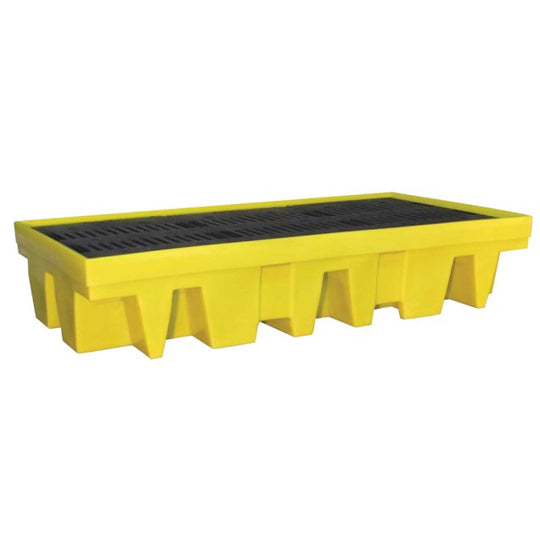
8 Drum Spill Pallet
£703.77EX VAT · £844.52 INCView product
Single IBC Pallet Bund
£705.20EX VAT · £846.24 INCView product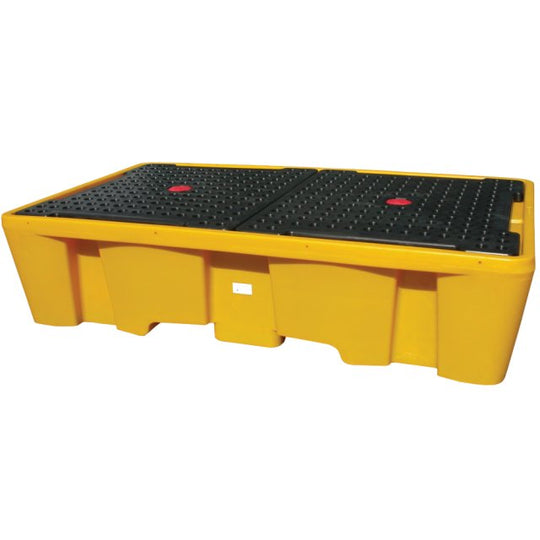
Double IBC Pallet Bund Yellow/Black
£711.65EX VAT · £853.98 INCView product
Nestable Double IBC Spill Pallet
£772.93EX VAT · £927.52 INCView product
Single IBC Bund with dispensing drip tray
£861.08EX VAT · £1,033.30 INCView product
4 Drum Covered Spill Pallet Bund
£1,097.91EX VAT · £1,317.49 INCView product
4 Drum Lockable Bunded Pallet with Hard Cover
£1,232.30EX VAT · £1,478.76 INCView product
Single IBC Covered Spill Pallet Bund
£1,593.87EX VAT · £1,912.64 INCView product
Double IBC / 8 Drum Covered Spill Pallet Bund
£1,975.43EX VAT · £2,370.52 INCView product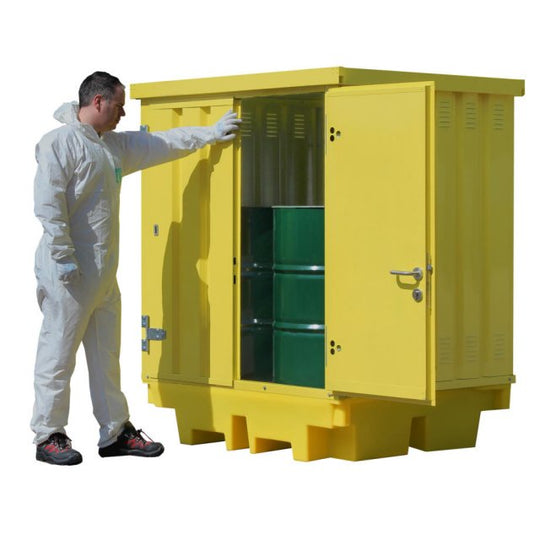
4 Drum Plastic Covered Spill Bund
£2,165.43EX VAT · £2,598.52 INCView product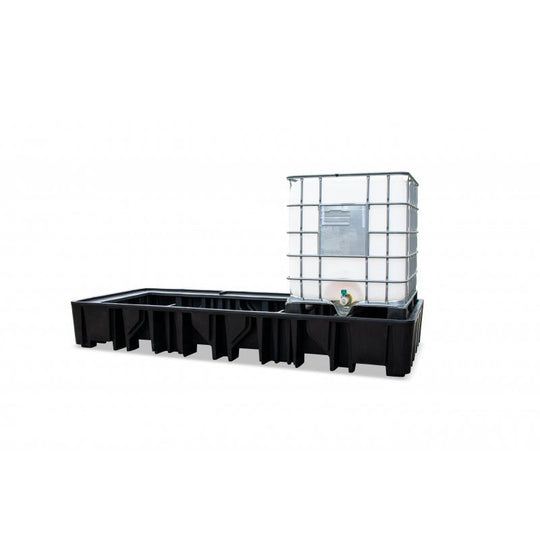
Platformless Triple IBC Bund
£2,408.00EX VAT · £2,889.60 INCView product
IBC Plastic Covered Spill Bund
£2,502.57EX VAT · £3,003.08 INCView product
8 Drum / 2 IBC Hard Covered Spill Bund
£3,517.05EX VAT · £4,220.46 INCView product


Talk to a
specialist
Sizing, regulations, installation. Our team has been answering these questions for over 25 years.
At Tanks Direct, we stock a range of comprehensive bunds and containers that are essential for maintaining compliance with environmental regulations while protecting your workplace from costly spills and contamination. We help provide the peace of mind that comes from knowing your facility is properly protected, whether you're storing a single drum in a workshop or managing extensive chemical storage operations across a large industrial site. From compact drip trays that catch minor leaks during routine maintenance to comprehensive sump floor kits that create secure containment zones for entire storage areas, we supply the equipment you need to maintain safe working conditions. Our bunded storage systems combine practical functionality with regulatory compliance, offering options such as lockable units for secure storage of valuable materials and integrated shelving systems that maximise your storage efficiency without compromising safety. For warehouses and distribution centres, our under-racking systems integrate seamlessly with your existing infrastructure, while our safety ramps ensure that containment areas remain fully accessible for forklifts and other handling equipment.
Bunds And Containers FAQs
How much bund capacity do I actually need?
UK regulations require secondary containment to hold at least 110% of the largest single container's capacity, or 25% of total stored volume if you're storing multiple containers — whichever figure is greater. For sites storing hazardous substances near watercourses or drains, some environmental permits demand even higher percentages, so it's worth checking with the Environment Agency or your local authority before you buy. We can help you match capacity to your actual drum or IBC count.
Can I store different types of chemicals in the same bund?
Generally, no — incompatible substances such as acids and oxidisers should never share a bund, as a leak could cause a dangerous reaction. Best practice is to segregate chemical families into separate bunded areas or use bunds with removable dividers. Always check COSHH data sheets and your site's chemical storage risk assessment before grouping products together.
Do drip trays and spill pallets need to be WRAS approved?
WRAS approval applies specifically to fittings and materials in contact with potable water supplies, so it's not generally relevant to drip trays or spill containment for oils, fuels and chemicals. What matters more here is chemical compatibility of the tray's construction — polyethylene handles most oils and many chemicals well, while steel trays suit heavier industrial use. Always check the manufacturer's chemical resistance chart against what you're actually storing.
What's the difference between GRP and polyethylene bunded units?
Polyethylene (polyethylene/HDPE) bunds are lightweight, corrosion-proof and cost-effective for most oils, fuels and general chemical storage, making them the standard choice for workshops and yards. GRP (fibreglass) units offer greater rigidity and structural strength, useful for larger fixed installations or where extra impact resistance is needed. Both are UV-stable for outdoor use, though GRP tends to suit heavier-duty or custom-shaped containment better.
Are safety ramps compulsory for bunded storage areas?
There's no blanket legal requirement, but if forklifts, pallet trucks or other wheeled equipment need regular access over a bund wall, a proper safety ramp is strongly recommended for both safety and practicality. Ramps also protect the bund itself from impact damage that could compromise its containment integrity over time. If your site has frequent vehicle movement in and out of a containment area, factor a ramp into your setup from the start.
How do under-racking sump systems work in a warehouse setting?
Under-racking systems consist of low-profile sump sections that fit beneath standard pallet racking, catching any drips or spills from stored drums and IBCs without disrupting racking layout or forklift access. They're typically supplied in modular sections so you can build containment along an entire aisle or just beneath specific bays handling hazardous liquids. This makes them a practical retrofit option for distribution centres that need compliant containment without a full warehouse redesign.