
WasteWater Pumps
Handle grey and foul water.
Waste Water Pumps Sub-Categories

Hippo 50 Sewage Pump, Horizontal Discharge
£314.00EX VAT · £376.80 INCView product
Hippo 50 Sewage Pump, Vertical Discharge
£314.00EX VAT · £376.80 INCView product
Hippo 75 Sewage Pump, Horizontal Discharge
£396.00EX VAT · £475.20 INCView product
Hippo 75 Sewage Pump, Vertical Discharge
£396.00EX VAT · £475.20 INCView product
190 Litre Grey Water Pump Station, 6m lift
£397.00EX VAT · £476.40 INCView product
Hippo 100 Sewage Pump, Horizontal Discharge
£408.00EX VAT · £489.60 INCView product
Hippo 100 Sewage Pump, Vertical Discharge
£408.00EX VAT · £489.60 INCView product
300 Litre Grey Water Pump Station, 6m lift
£413.00EX VAT · £495.60 INCView product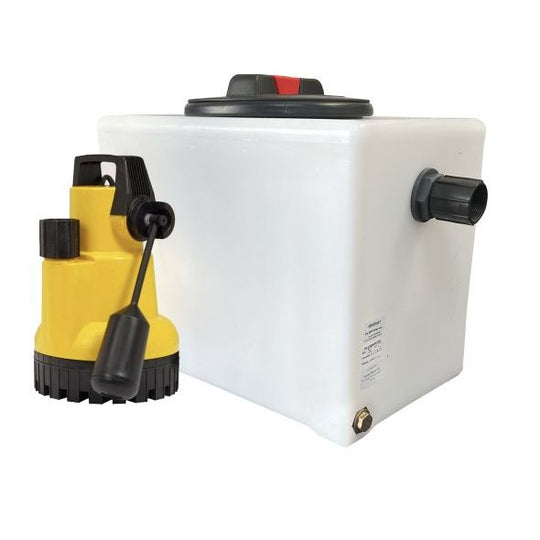
Cabin Master 50l Grey water tank
£469.00EX VAT · £562.80 INCView product
450 Litre Grey Water Pump Station, 6m lift
£483.00EX VAT · £579.60 INCView product
190 Litre Twin Pump Grey Water Pump Station, 6m lift
£522.00EX VAT · £626.40 INCView product
600 Litre Basement Drainage Pump System, 6m lift
£524.00EX VAT · £628.80 INCView product
Hippo 150 Sewage Pump, Horizontal Discharge
£530.00EX VAT · £636.00 INCView product
Hippo 150 Sewage Pump, Vertical Discharge
£530.00EX VAT · £636.00 INCView product
300 Litre Twin Pump Grey Water Pump Station, 6m lift
£578.00EX VAT · £693.60 INCView product
Hippo 200 Sewage Pump, Horizontal Discharge
£617.00EX VAT · £740.40 INCView product


Talk to a
specialist
Sizing, regulations, installation. Our team has been answering these questions for over 25 years.
We provide high-quality wastewater pumps that deliver reliable performance for your water removal and drainage challenges. Our carefully selected range covers everything from basement drainage pumps that tackle residential water issues to specialised sewage pumps designed for tough waste management scenarios. You'll find both vertical and horizontal discharge options engineered for exceptional value and minimal maintenance requirements. Our comprehensive selection includes single-stage and twin-stage pump stations suitable for commercial and domestic settings, plus grey water pumps that support sustainable water usage systems. Each pump combines superior engineering with practical design, ensuring efficient handling of sewage, surface water, and basement drainage across various applications. Installation is straightforward, and ongoing maintenance remains minimal, giving you dependable water management that keeps your drainage systems running smoothly and effectively whilst providing excellent long-term value.
Waste Water Pumps FAQs
What's the difference between a sewage pump and a grey water pump?
Sewage pumps are designed to handle foul waste containing solids and are fitted with a cutting or vortex impeller to pass material without blocking. Grey water pumps handle wastewater from baths, showers and washing machines — no solids handling needed, so they're generally lighter-duty and cheaper to run. Using a grey water pump on a foul application will lead to premature failure or blockages, so always match the pump to the waste type.
Should I choose a vertical or horizontal discharge pump?
Vertical discharge pumps push waste straight up and are the usual choice where the pump sits in a sump or chamber with limited space around it, such as basement installations. Horizontal discharge units are better suited to pump stations and larger chambers where pipework runs off to the side. Check your chamber design and available pipe route before ordering, as the two aren't interchangeable without adapting the outlet.
How do I size a wastewater pump correctly?
You need to know both the flow rate (litres per minute) you expect to handle and the total head — the vertical lift plus friction losses through the pipework. Undersized pumps will run continuously and wear out fast, while an oversized pump wastes energy and can cause excessive cycling. If you're unsure, tell us the property size, number of appliances or the pump station's expected inflow and we can help you match a suitable model.
Are pump stations suitable for basements below the main sewer level?
Yes — this is exactly what a below-ground pump station is for. Waste and water gravitate into a sealed sump chamber and the pump then lifts it up to the level of the main drain or sewer connection. Single-stage stations suit smaller domestic basement conversions, while twin-pump stations offer built-in redundancy for busier commercial or higher-risk applications.
Do wastewater pump installations need to meet building regulations?
Yes, pumped drainage installations fall under Building Regulations Part H, and non-return valves, adequate ventilation and access for maintenance are all typically required. Where a pump discharges to a public sewer, you may also need to check requirements with your local water authority. We'd always recommend using a competent installer familiar with pumped systems, particularly for basement conversions or commercial pump stations.
How much maintenance do wastewater pumps actually need?
Modern sewage and drainage pumps are designed for minimal intervention, but a periodic check of the non-return valve, float switch and impeller for debris will keep things running reliably. For domestic basement pumps, an annual inspection is usually sufficient; commercial pump stations handling higher volumes benefit from more frequent servicing. Keeping wet wipes, sanitary products and other non-flushable items out of the system is the single biggest factor in avoiding blockages and premature wear.